
What is Technical Report Management?
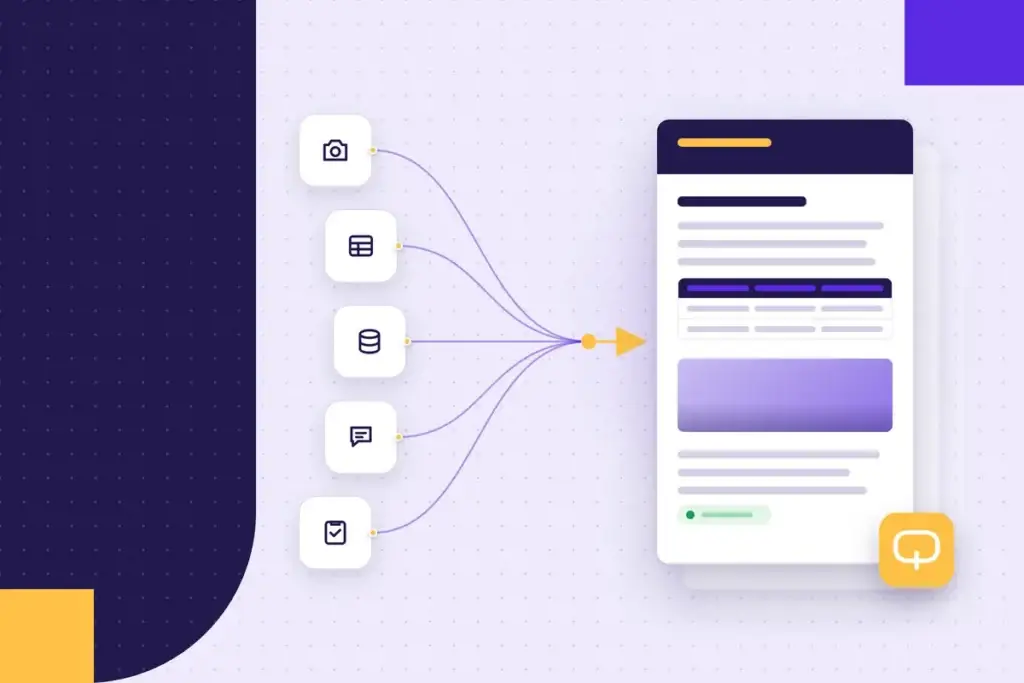
Technical Report Management (TRM™) is a software category for managing the full lifecycle of technical report deliverables, from the first project inputs through writing, collaboration, review, delivery, and continuous improvement. It connects the people, information, standards, workflows, and institutional knowledge behind the report in one managed system.
A finished technical report can make the work behind it look deceptively simple. The client sees one polished deliverable. What they don’t see is everything that had to come together to get it there.
A geotechnical investigation or a Phase I ESA may draw from field exploration, site observations, laboratory results, historical and regulatory data, photographs, interviews, standard language, prior project precedent, engineering analysis, project-specific findings, appendices, and senior review. A Property Condition Assessment may need hundreds of observations, photographs, system details, costs, and recommendations to stay aligned from the field through the executive summary. A materials testing report may need to get from the field to the client in a day.
Most firms have found ways to make all of that work. Word handles the draft. Spreadsheets carry certain data. Shared drives house files and prior reports. Email moves comments around. Project systems track the broader job. Templates and specialized applications fill the gaps.
The challenge is not any one tool. It is everything that has to happen between them.
That is the problem Technical Report Management was created to solve.
Why the process behind the report is getting harder to manage
Technical report production has become too complex and too important to manage as a loose collection of document tasks. The final report may be a file, but producing it is an operational process that affects capacity, quality, margin, and the way expertise moves through a firm.
Most firms did not intentionally design their current report production workflow. It accumulated.
A Word template solved the need for consistency. A spreadsheet handled recurring data. Shared folders became the home for photos and appendices. Email became the easiest way to pass a draft to a reviewer. New report types created new templates. Different offices developed their own variations. Specialized tools were added wherever the general-purpose stack fell short.
Each decision made sense.
Over time, though, people became the integration layer connecting all of those systems. A writer knows which prior report contains the strongest language. A project manager remembers who still owes a section. A reviewer catches that the same project value appears differently in two places. The process works because experienced people know how to navigate it.
That arrangement becomes harder to sustain as volume rises.
Taken together, the numbers point to the same pressure: firms have plenty of work, limited capacity to absorb it, and a reporting process that still consumes a surprising amount of skilled labor. When the AEC advisory firm Morrissey Goodale interviewed firm leaders for its independent research report on Technical Report Management, the same complaint kept surfacing: highly paid technical staff spending too many hours on routine documentation.
The finished report hides the process behind it
One reason the problem can be difficult to see is that the finished deliverable usually looks fine. It went out, the client accepted it, and whatever it took to get there is invisible.
Technical firms work hard to protect quality. When something in the process fails, someone compensates for it. A reviewer fixes the formatting. A project manager chases the approval. A writer searches until the right previous report turns up. The report still goes out, and the inefficiency stays hidden inside the effort it took to get there.
Quire’s research among more than 200 technical report-driven firms measured that effort. Firms rate the reports they produce higher than the process they use to produce them, but this is not a strong deliverable sitting on a weak process. Neither score is where firms want it. Quality is being held up by effort, and almost every firm shows some version of the gap.
The Pain Premium is the extra time, effort, and cost a firm absorbs to maintain high-quality technical deliverables despite friction in the process used to produce them.
The gap matters because of what closes it. Quality that depends on people compensating is not the same as quality the process delivers. Skilled staff are absorbing the difference between the report the client sees and the process that produced it, one workaround at a time, and that is capacity the firm is paying for without seeing it.
Does your firm have a report process problem?
If several of these sound familiar, the issue may be bigger than report writing:
- Writers regularly start by finding an old report to copy from.
- The same project information gets entered in multiple places.
- Reviewers routinely catch formatting, version, or consistency issues.
- Report status depends on asking someone where it stands.
- Different offices maintain different versions of the “same” template.
- Senior staff spend meaningful time on document production instead of technical review.
- The firm has years of valuable reports but no easy way to search what is inside them.
- Leadership knows reports take too long but cannot see where the time goes.
None of these is a writing problem. They are signs of a process being held together by people, and Technical Report Management addresses the process so expertise does not have to.
What Technical Report Management actually manages
TRM puts structure around the parts of report production that have traditionally been managed separately: the deliverable, its information, the workflow around it, the knowledge behind it, and the people responsible for producing it.
A useful way to understand TRM is to look beyond the finished document. The deliverable is only one part of the equation. Behind it is the information that has to reach the right place, the process that moves the work forward, the knowledge the firm has already accumulated, and the people responsible for putting it all together.
Take one value, the depth to groundwater from a boring log. Managed separately, it is typed into the executive summary, the narrative, a table, and a figure caption, and checked in all four places when the lab revises it. Managed as part of one system, it is entered once and flows to each of those places, and a change in one is a change in all of them. Multiply that by every value, every photo, every approved paragraph, and every reviewer, and the shape of the category becomes clear.
- DeliverableNarrative, tables, photos, appendices
- InformationProject data, field inputs, lab results
- ProcessAssignments, drafts, comments, approvals
- KnowledgeApproved language, precedent, reasoning
- PeopleField teams, authors, reviewers, leaders
Standardization should stop where judgment starts
Managing the process does not mean making every deliverable look or read the same. Required structure, approved language, branding, recurring project information, and standard tables should be consistent. Observations, analysis, and recommendations should remain specific to the project.
A limitation statement should not depend on which writer happens to be assigned. A foundation recommendation should absolutely depend on the conditions, analysis, and engineering judgment involved.
Quire describes this as flexible standardization: standardize the production work that should repeat, and keep professional control over the work that should not.
How TRM differs from the tools firms already use
TRM does not replace every application involved in project work. It fills a different role: managing the complete process that turns technical work into a finished deliverable.
| Tool or approach | What it does well | What TRM adds |
|---|---|---|
| Word processing | Creating and editing documents | Management of the lifecycle around the document |
| Custom templates | Providing repeatable starting structure | Governance, dynamic variation, reusable data and content |
| Document management | Storing, securing, and retrieving files | Management of how the technical deliverable is produced |
| Project management | Tracking tasks, schedules, resources, and projects | Management of the deliverable itself |
| Report writing software | Accelerating drafting or document generation | The stages before, around, and after authoring |
| General-purpose AI | Generating, summarizing, and analyzing content | Firm-grounded knowledge inside a governed technical workflow |
| Technical Report Management | Managing the technical deliverable lifecycle | A connected process from inputs through delivery and measurement |
The prevalence of familiar tools helps explain why the category emerged. In the practitioner research behind Morrissey Goodale’s TRM research report, Microsoft Word was used by effectively every participating firm, 82%† relied on custom templates, and only 20% reported using specialized software.
The work became specialized. The tools around it mostly didn’t. Technical reporting now carries more data, more contributors, more review, and more liability than the general-purpose environment it still runs on was built to handle. TRM does not argue that those tools are obsolete. It gives firms a way to manage the report-specific workflow those tools were never designed to own.
How can this document be created faster?
How should the firm manage the system that repeatedly creates, reviews, delivers, and learns from these technical deliverables?
The difference is clearest after delivery. A finished document is the end of a word-processing workflow. In TRM, it is also process data and reusable knowledge for the next project.
How the technical report lifecycle works
The technical report lifecycle has six connected stages. The goal of TRM is not simply to make each stage faster, but to carry information, context, accountability, and standards between them so the next person does not have to reconstruct what the previous person already knew.
Collect & Upload

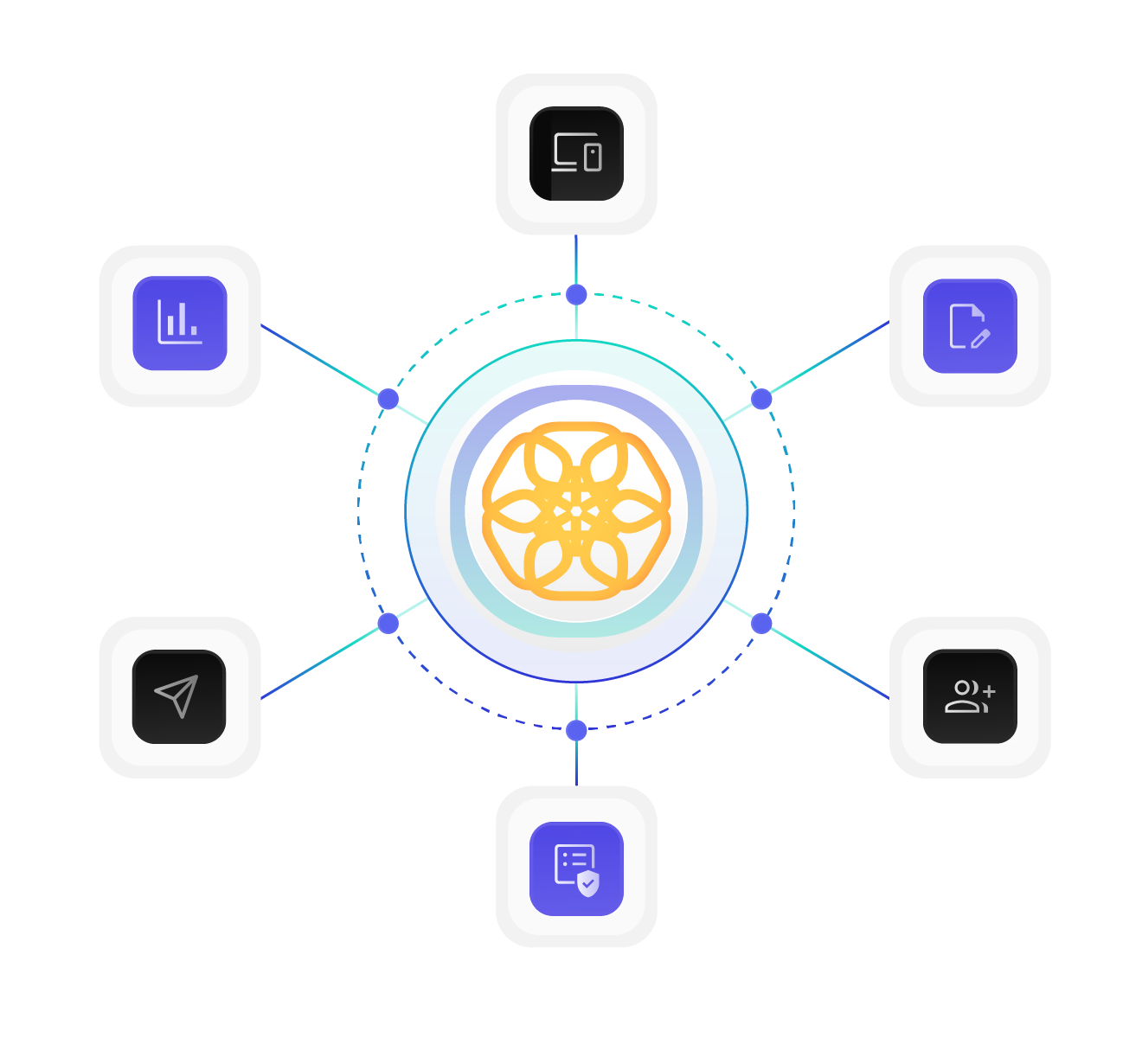
Many reporting problems begin before the first sentence is written. Field observations and photographs have to be sorted, captioned, matched to the right finding, and moved into the report. Project information originates in another system and gets copied into several sections. Third-party data arrives separately and has to be attached.
None of that is difficult in isolation. At volume, it is real production work, and every transfer is a chance for the field record and the report to drift apart.
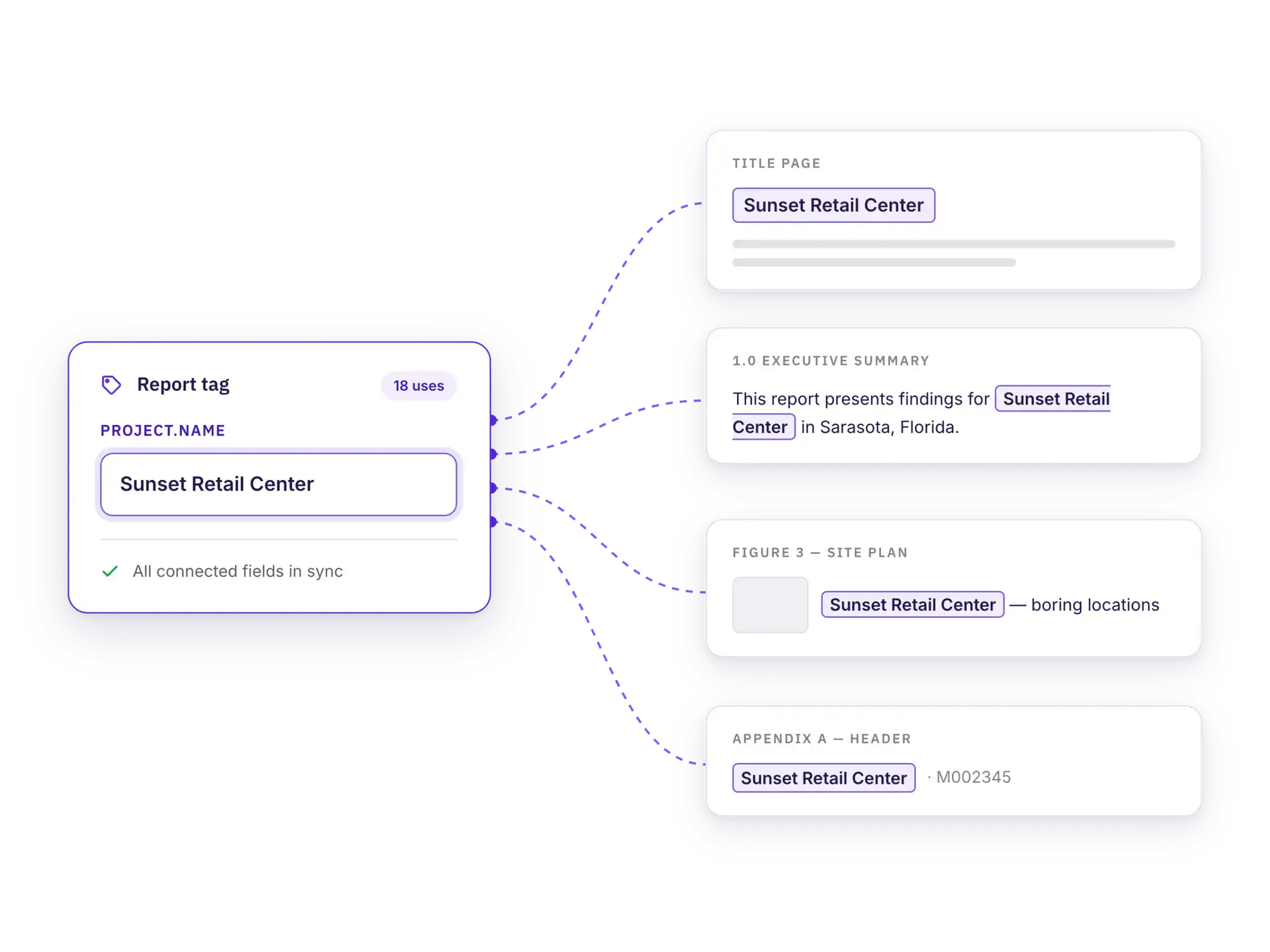
Under TRM, the report starts closer to the source: information is captured once, in a form the rest of the lifecycle can use, and the handoffs between the field, source systems, and the document shrink.
Write & Edit
Most technical professionals do not start from a blank page. They start from what the firm already knows: a current template, approved language, a prior recommendation, a comparable project.
In practitioner interviews for the TRM research, 75%† described copying and pasting from prior reports as part of their normal workflow. Copying is not the interesting part. The revealing question is why a finished report has become the easiest way to retrieve the firm’s reusable knowledge.
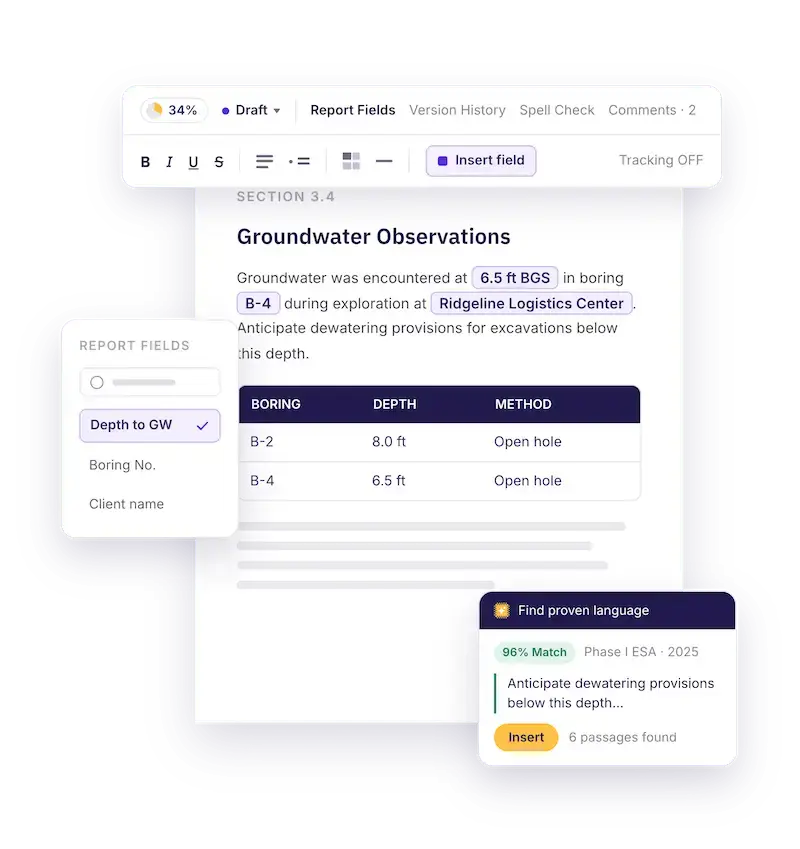
TRM makes that knowledge a managed asset rather than a search. Templates, standard language, and structured project data live in the system, and tools such as Quire’s WordBank and Quire AI bring approved passages and comparable projects to the writer. The system provides a better starting point. The practitioner still owns the conclusion.
Share & Collaborate
A deliverable can have one primary author and still involve many contributors: field teams, specialists who own a section, project managers, outside contributors, and late-arriving reviewers.
When the file itself passes between those people, collaboration creates an administrative layer of its own: copies multiply, comments move to email, and someone has to work out whether the latest changes made it in. A managed environment keeps the active deliverable, assignments, comments, and revision history in one place.
Review & Approve
Review is one of the most expensive stages of the lifecycle because it is where experienced professionals apply judgment. It is also where production problems surface.
A reviewer finds the same value stated two ways, an old paragraph not fully adapted, or a table that disagrees with the narrative. Those issues matter, but they rarely require senior expertise to catch. 56%† of firms in the Pain Premium research cited consistency gaps across projects, teams, or offices.
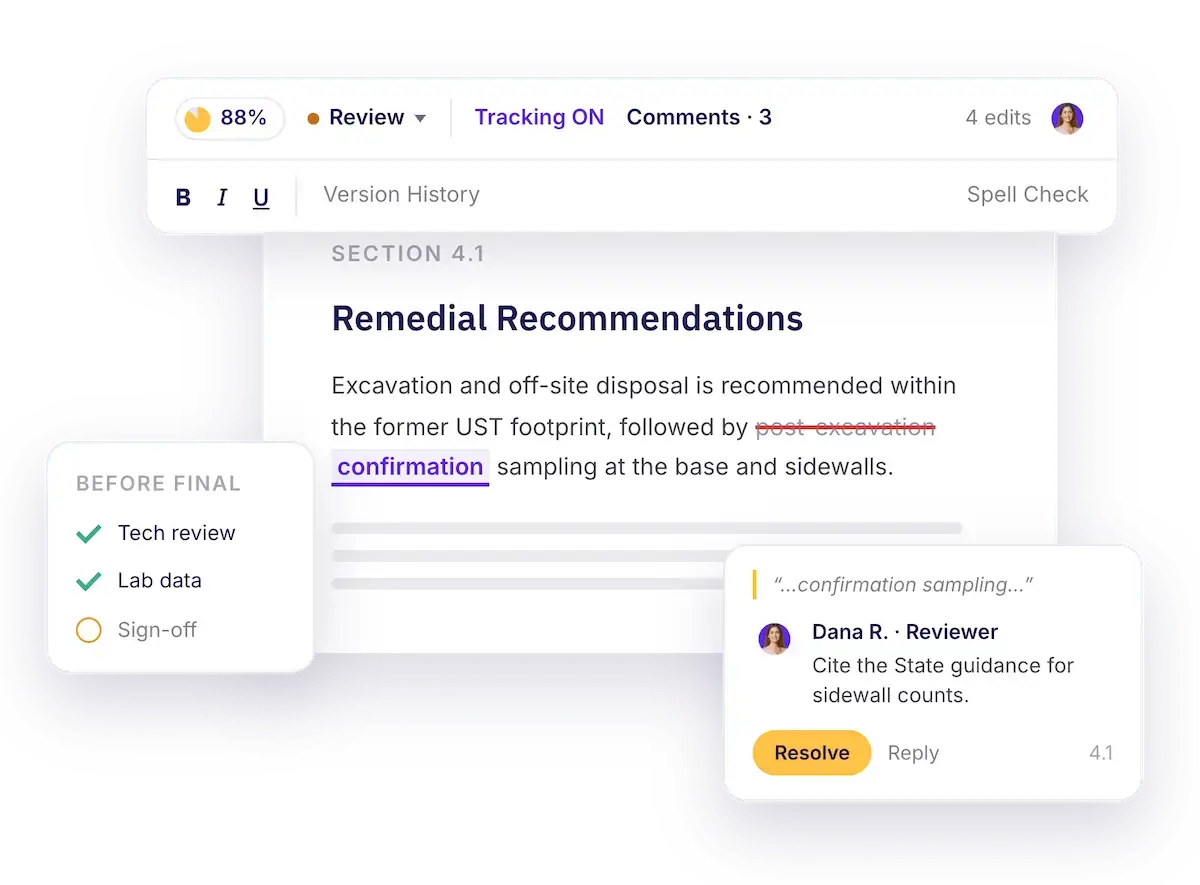
TRM moves more of that control upstream through governed templates, structured data, reusable approved content, and connected comments, routing, and approvals. The intent is not less QA/QC. It is to spend QA/QC time on whether the evidence supports the conclusion rather than on whether the site name is spelled the same way twice.
Publish & Deliver
A report can be technically complete without being ready to deliver. Front matter, numbering, tables of contents, appendices, signatures, and branding can add another round of production work after substantive review is finished. 66%† of firms in the Pain Premium research identified formatting friction involving photos, tables, and references.
Under TRM, publication stays connected to the governed report: numbering, contents, appendices, and formatting are generated from the reviewed document rather than rebuilt around it. The closer the reviewed report is to the delivered report, the fewer opportunities remain for last-minute fixes.
Analyze & Measure
The final deliverable is not the only thing the process produces. It also produces information about how the work happened.
How long did drafting take? Where did the report wait? Which stages become bottlenecks? Are certain templates driving more editing? Is review capacity concentrated in too few people? Are offices following materially different processes?
Without that data, improvement depends largely on anecdote.
“Reports take too long” is a complaint. It is not a diagnosis.
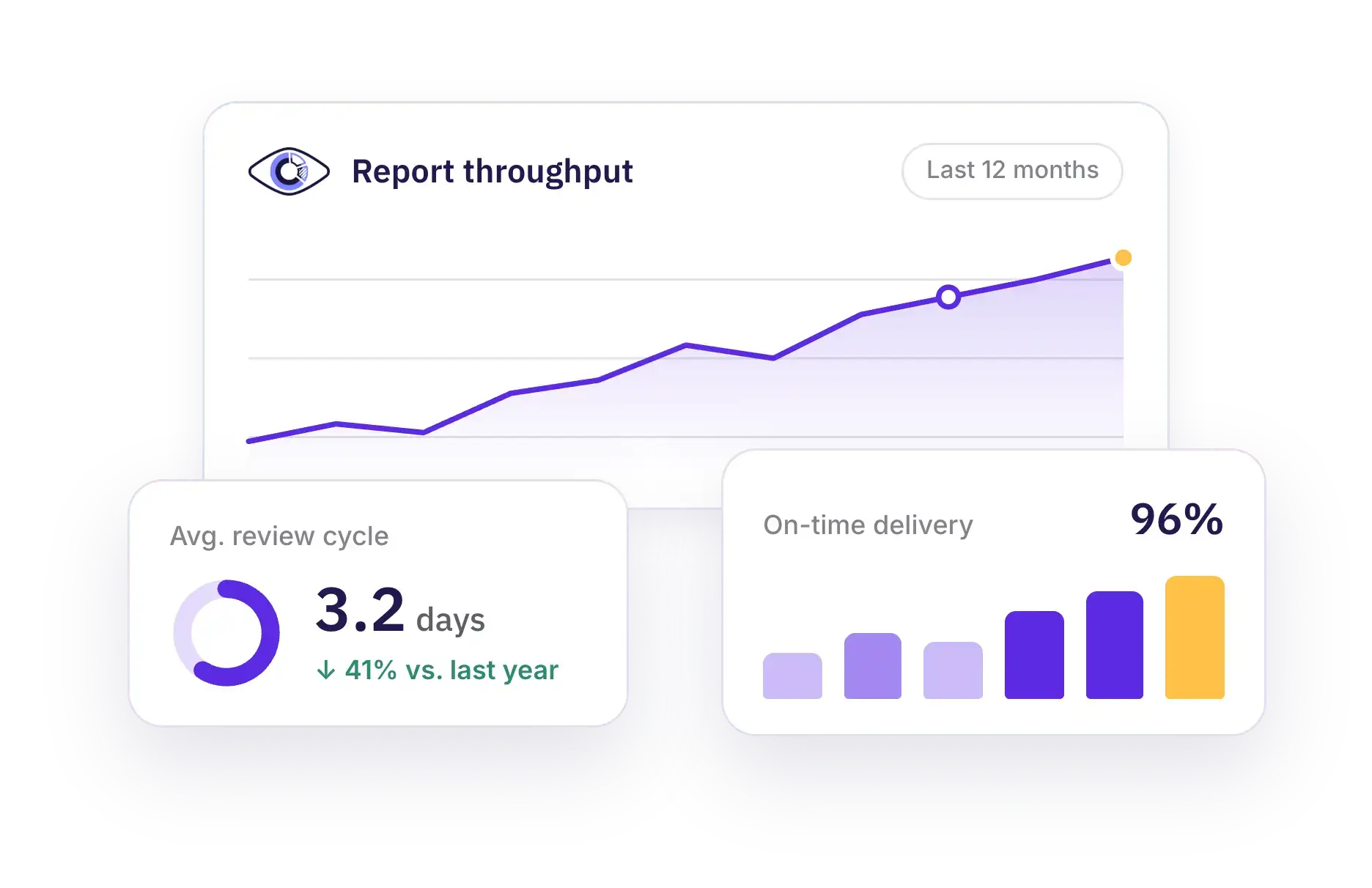
This stage is what most clearly separates TRM from ordinary report software. Because the whole lifecycle runs through one system, cycle time, workflows, templates, and service lines become measurable, and the process can be improved on evidence rather than impression. QuireSight Analytics is built for that loop: the process generates data, the data shows where to improve, and the improvements shape the next report.
What changes when the process is managed
The business value of TRM is not faster typing. It is recovering capacity that is currently consumed by the production mechanics surrounding technical expertise, and putting it back to work where judgment matters.
Morrissey Goodale’s independent study of technical report production, built on research interviews with AEC firms of 12 to 1,500 employees, found that Technical Report Management can reduce report development time by 40 to 70 percent.
Time is the headline number. The more durable changes show up in four places.
More usable capacity
Less professional time absorbed by production mechanics. A firm with a twelve-month backlog and open positions can take on more work with the people it already has.
More consistent quality
Standards become part of the system instead of something reviewers enforce by hand. Firms using TRM have reported up to a 50%† increase in reports approved on first submission.
Better leverage of senior expertise
Reviewers spend more time on judgment and less on document repair. The scarcest people in the firm stop being its formatting safety net.
Knowledge that compounds
Each project adds usable precedent instead of simply another finished file. Approved language and prior reasoning are available to the next team without a hallway search.
The common thread is simple: valuable professional time moves away from document mechanics and back toward analysis, judgment, review, delivery, and growth.
What that looks like day to day depends on where someone sits. There are short perspectives on TRM for firm leaders, service line leaders, project managers, technical professionals, and IT and innovation leaders.

Where Technical Report Management applies
TRM is relevant wherever a firm repeatedly turns technical observations, data, analysis, and professional judgment into formal deliverables. The subject matter changes by discipline. The production pressures are remarkably similar, but they show up in different places.
Environmental Consulting
Phase I and Phase II ESAs, monitoring reports, remediation work, and risk assessments combine site information, historical and regulatory data, observations, and supporting documentation, and the same site often returns years later. TRM keeps those inputs connected across time and across the firm while the environmental professional’s conclusion stays project-specific.
Geotechnical Engineering
Geotechnical reports bring together borings, laboratory results, groundwater, seismic parameters, analyses, and recommendations, and precedent works differently here. The most useful prior project is not the one with the closest address; it is the one where similar subsurface conditions produced a relevant engineering decision. TRM’s value in geotech is structured subsurface information, findable precedent, and room for judgment.
Construction Materials Testing & Inspection
Inspection reports, daily reports, and testing documentation depend on structured information captured near the field, often at high volume and on short turnaround. Here TRM is mostly about field-to-report velocity: shrinking the distance between what a technician records on site and the deliverable the client receives.
CRE Due Diligence
Property Condition Assessments, seismic reviews, zoning reports, and construction monitoring repeat property data, photographs, building-system findings, and costs across hundreds of sites, often for lenders and portfolio owners with requirements of their own. TRM’s value is repeated property data handled once and consistency across a portfolio.
Building & Facility Services
Condition assessments, envelope investigations, commissioning, and capital planning turn field observations, system data, deficiencies, and costs into deliverables that owners use to make funding decisions. TRM keeps the observation, the deficiency, and the cost tied together from the walkthrough to the capital plan.
Specialty Advisory Services
More specialized work has less repetitive content, but the same production questions remain: what should be standardized, what knowledge should be reusable, how should review work, and how does the firm keep what each project teaches?
Where AI fits into Technical Report Management
AI is most useful in TRM when it helps professionals retrieve, understand, and apply trusted firm knowledge inside the report workflow. Generating new text is only one small part of the opportunity.
AI use is moving quickly. Quire MarketWatch Q1 2026 reported a 148%† year-over-year increase in AI usage, but 65%† of firms said they had not yet seen measurable benefits. That gap is not unique to technical firms. Thomson Reuters’ 2026 study of more than 1,500 professionals found organization-wide GenAI use had reached 40%, while only 18% said their organizations tracked ROI from AI tools.
Adoption is moving faster than operational value.
For technical work, the more useful AI questions are often not “Can this write a paragraph?” They are questions such as:
- Has the firm encountered this condition before?
- Which past projects are genuinely comparable?
- How did prior teams address the issue?
- What assumptions led to the recommendation?
- Where did similar projects reach different conclusions?
- Which approved language could provide a starting point?
Those tasks fall broadly into two groups.
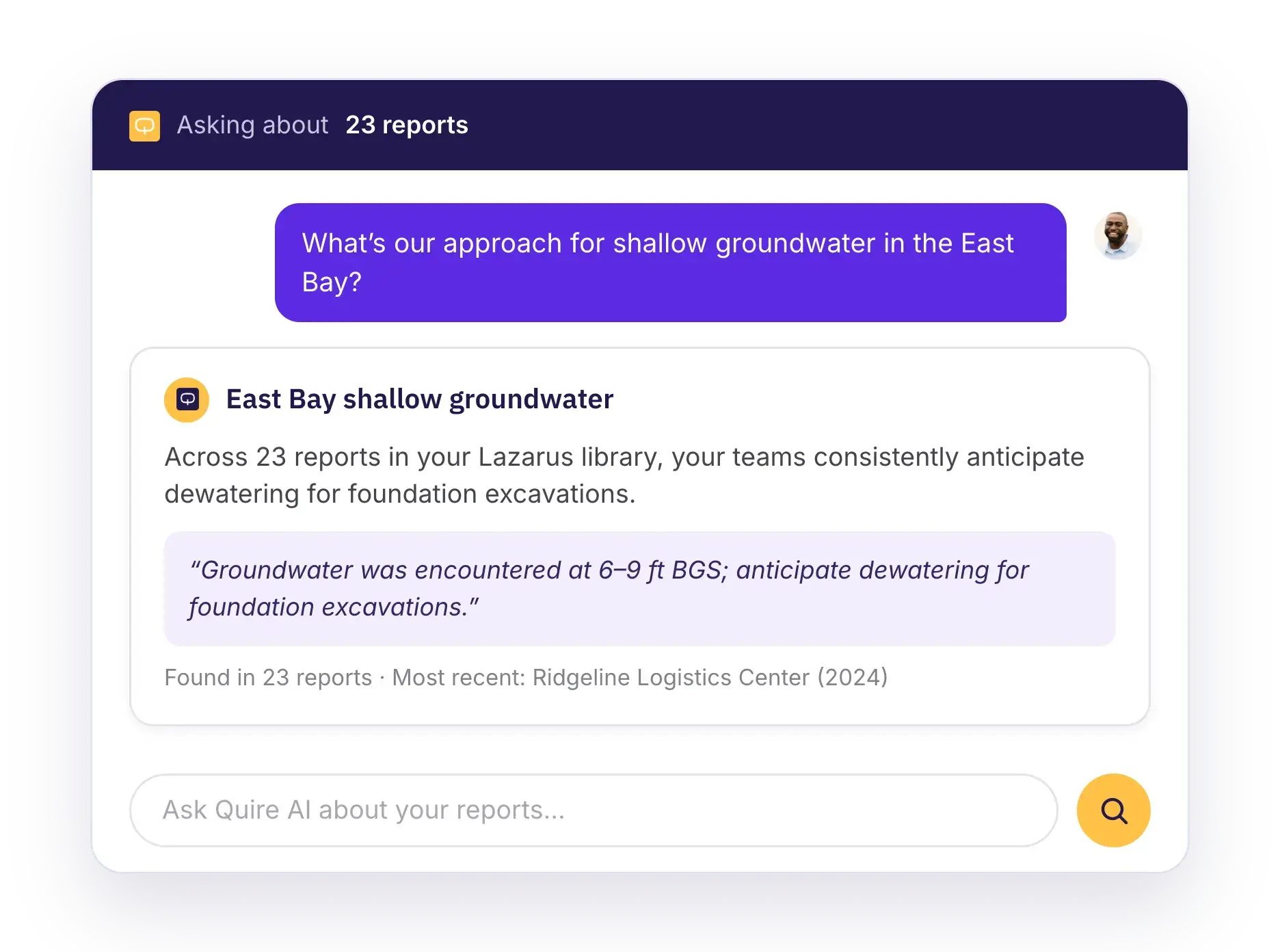
Retrieval finds what the firm already knows. A geotechnical professional might search for past projects with particular groundwater and subsurface conditions. An environmental professional might look for prior ESAs involving a specific site history or condition.
Synthesis helps understand what was found. It can compare reports, summarize differences, surface recurring approaches, or make prior reasoning easier to examine.
Together they form a simple sequence: find what the firm already knows, understand how it was reached, and apply it to the current project. AI can carry the first two steps. The third stays with the practitioner, who still decides what applies.
Quire AI provides Search and Chat natively within TRM for reports created in the platform, keeping knowledge retrieval close to current work.
AI can shorten the path to the evidence. It does not own the decision.
How to evaluate a TRM platform
A TRM platform should be tested against the firm’s actual report production workflow, not a polished demo file or a long list of software features.
The best test case is usually the report everyone knows is difficult: the template with too many variations, the field-heavy project, the deliverable with several contributors, or the workflow that always seems to get stuck in review. Put that report in front of each platform and work through eight questions. The answers separate a report-writing tool from a system that manages the lifecycle.
- 01Lifecycle coverageCan one real report move from the first field input to the delivered PDF without leaving the system?Many tools cover one stage well, usually drafting, and hand off to email, shared drives, and Word for the rest. The test is whether inputs, drafting, collaboration, review, publication, and measurement happen in one governed place, so the handoffs that cost time today disappear rather than move. If the demo starts at a blank document, ask what happened before that.
- 02Template flexibilityCan one template handle the Phase I with an added vapor scope, the geotech report with three foundation options, and the PCA for a lender with its own format, without forking into three templates?Rigid templates get abandoned and loose ones stop being standards. Look for optional and conditional sections, client-specific variants, and control over which parts writers can change. A firm should be able to govern structure and standard language while the technical content stays project-specific.
- 03Structured informationIf the site name, the client, or a lab value changes, how many places does someone have to fix?Pick a value that appears on the cover, in the executive summary, in a table, and in an appendix header. In a well-designed platform it is entered once as data and flows to each place. In a document-centric tool it is typed four times and checked four times, which is where most re-entry and most consistency errors come from.
- 04Knowledge reuseCan a writer find the approved paragraph or the comparable project without knowing which PDF it lives in?Copying from old reports is the workaround for a missing knowledge layer. Look for a governed library of approved language that is searchable by content rather than filename, and for search that surfaces comparable projects by conditions, not just titles. Ask who maintains the library and how approved language gets retired.
- 05ReviewDoes review happen on the live report, with the history intact, or on an emailed copy?Recreate the firm’s actual QA/QC path: section-level comments, tracked changes, routing to the right reviewer, and a record of who approved what. The goal is for senior reviewers to spend their time on the technical conclusion rather than on catching a table that disagrees with the narrative. First-pass approval rate is the number to watch after adoption.
- 06IntegrationWhich systems feed a report today, and which of them can feed it directly?Map the project management, ERP, GIS, lab, environmental-data, and field-capture systems involved in one deliverable. Then ask which connections exist, which are on a roadmap, and which will stay manual exports. Every system left outside the report process is a place someone will keep re-entering data.
- 07AnalyticsAfter the report ships, what can the firm measure that it cannot measure now?A document tool produces a file. A TRM platform should also produce process data: cycle time by stage, where reports wait, which templates drive the most editing, review load by person, and differences between offices. Ask to see the reporting on the firm’s own report types, not a slide about it.
- 08AI governanceWhen the AI answers, can the reviewer see exactly which report and passage it came from?Grounding, traceability, and data boundaries matter more than fluency. AI inside TRM should retrieve from the firm’s own approved reports, cite its sources, keep one client’s data out of another’s answers, and leave the conclusion with the professional. Ask what happens when the AI has no relevant source, and how the platform shows that.
A TRM platform should leave the firm with less process to hold together manually, not simply another application to maintain. Timing matters too. In the Morrissey Goodale study, only about 20% of AEC firms considered themselves digitally advanced, while 52% expected to reach that level within three years. What is an advantage today becomes the baseline quickly.
Quire TRM™ applies this full-lifecycle model through managed templates, WordBank, Report Tags, SmartTables, Quire Mobile, collaboration and review workflows, integrations, QuireSight Analytics, and native Quire AI. More than 1.5 million technical reports† have been processed through Quire across AEC, environmental consulting, and commercial real estate.
What happens to historical reports
Improving the process for new reports does not make years of previous work less valuable.
Pre-Quire reports may contain some of a firm’s strongest language, technical decisions, and project precedent, but that knowledge can remain difficult to use when it sits across folders of Word documents and PDFs. The practical answer is to bring eligible historical reports into the same searchable environment as current work, so precedent is found the same way whether it was written last month or ten years ago.
Lazarus
Lazarus is Quire’s optional ingestion and indexing layer for pre-Quire historical reports. It brings eligible historical intelligence into the TRM environment so those reports become searchable through Quire AI alongside current Quire work.
Explore LazarusCommon questions about Technical Report Management
What is Technical Report Management?
Technical Report Management (TRM) is a software category for managing the full lifecycle of technical report deliverables: project inputs, writing, collaboration, review, delivery, and measurement. Rather than treating the report as a document to be typed, it treats production as a managed process and connects the information, standards, workflows, and firm knowledge behind every deliverable in one system.
Is Technical Report Management just report writing software?
No. Report writing software helps create the document. Technical Report Management manages the wider process that repeatedly produces it: project information, field inputs, reusable knowledge, contributors, workflow, review, publication, and measurement. Writing is one stage of TRM, not the whole category, and it is rarely the stage where the most time is lost.
Is TRM the same as document management?
No. Document management stores, organizes, secures, and retrieves files. TRM manages how the technical deliverable gets produced. A document management system may hold the finished report; a TRM platform manages the information, people, workflow, standards, and knowledge needed to create it. Many firms run both, with the finished report landing in the document system at the end of the lifecycle.
Does TRM replace Microsoft Word?
TRM addresses a larger problem than word processing. Word creates and edits documents; TRM manages the system around the document. The more useful question is whether the firm wants to keep building that reporting system out of general-purpose tools or use a platform designed around the lifecycle.
Does standardization make technical deliverables rigid?
It should not. Effective TRM standardizes what should stay consistent, such as structure, approved language, branding, recurring data, and workflow requirements. Practitioners keep control over observations, analysis, rationale, and recommendations. The goal is a reliable production baseline, not the same technical answer on every project.
What happens to existing report templates?
They become an input to implementation, not something to discard. The firm identifies the structures, standard language, optional sections, and rules that still earn their place, and drops the workarounds created by the old process. Established firm standards should get easier to maintain, not harder.
Does TRM work outside Environmental Consulting?
Yes. TRM applies wherever technical deliverables are repeatable and operationally significant, including Geotechnical Engineering, Construction Materials Testing & Inspection, CRE Due Diligence, Building & Facility Services, and Specialty Advisory Services. The technical content varies; the underlying lifecycle of inputs, drafting, review, delivery, and measurement is recognizable in each.
How does AI fit into TRM?
AI supports retrieval, comparison, synthesis, content reuse, and quality review when it is grounded in trusted firm information. Within TRM, AI should help practitioners find and understand relevant evidence while leaving project-specific conclusions with the practitioner. Grounding, traceability, governance, and data isolation are the evaluation criteria that matter.
How long does TRM implementation take?
It depends on the number and complexity of report types, existing templates, workflows, integrations, service lines, and governance requirements. A good implementation starts from the firm’s existing reporting model and translates it into a maintainable platform rather than forcing the organization into a generic process.
How much does Technical Report Management software cost?
Pricing varies by platform, deployment scope, number of users, integrations, and implementation needs. The useful comparison is against the cost of the existing process: production time, rework, senior review capacity, coordination, knowledge searching, and the project capacity those activities consume. Most firms have never priced that side of the ledger.
How can a firm tell whether it needs TRM?
Map one representative deliverable from first project input through final delivery. Mark each duplicate entry, manual handoff, search for previous work, version change, wait state, formatting repair, and review correction. If people are holding most of those pieces together by hand, there is a process worth managing. The Quire Fit Quiz is a quick way to start.
For additional product and technical questions, see the Quire FAQ.
The report is the deliverable. The system behind it matters too.
Technical firms have spent years refining the expertise contained in their reports. Technical Report Management applies the same discipline to the process that turns that expertise into a finished deliverable.
It gives structure to the production work that should be repeatable, keeps project-specific judgment in professional hands, makes firm knowledge easier to use, and creates visibility into a process that directly affects quality, capacity, and delivery.
Quire TRM is built around that complete lifecycle.
† Quire MarketWatch Q1 2026; Quire Pain Premium research among 200+ technical report-driven firms not using Quire; Morrissey Goodale, Technical Report Management research report (research interviews with 15 AEC firms of 12 to 1,500 employees, plus Deltek Clarity, ACEC Research Institute, and Unanet Inspire data cited in that report); TRM practitioner research; Quire platform data. ACEC Research Institute Q3 2026 engineering business sentiment study; Thomson Reuters 2026 professional services study.